
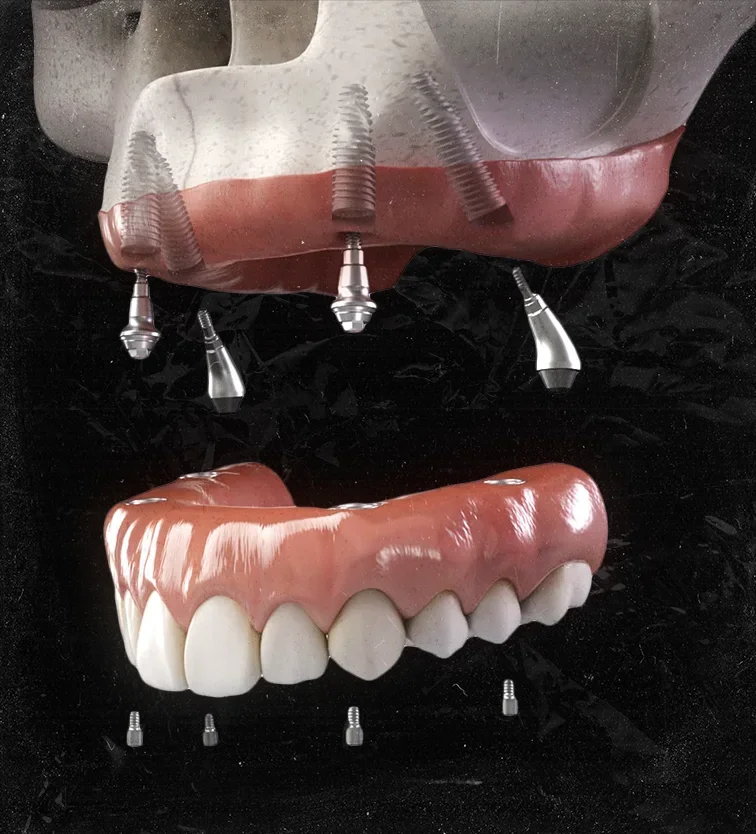


Key Points of this Article
- Many marketing strategies prioritize conversion over clinical accuracy
- “Holiday dentistry” narratives often conflict with medical reality
- Pricing can change after arrival due to incomplete pre-diagnosis
- Immediate loading is frequently used as a sales advantage, not a clinical decision
- High-volume clinics reduce treatment time per patient
- Warranty claims are often non-enforceable or misleading
Introduction
Dental tourism in Turkey has grown rapidly, driven by cost advantages and international demand. Alongside reputable clinics, a parallel layer of aggressive marketing has emerged.
Patients are often presented with simplified narratives:
- Fixed prices
- Fast treatment
- Vacation-like experience
- Guaranteed results
These narratives rarely reflect the full clinical reality.
Understanding the gap between marketing and medical practice is necessary to make informed decisions.
Table of Contents
The Illusion of “Holiday + Treatment”
A common framing positions dental treatment as part of a relaxed travel experience.
This is structurally misleading.
Most dental procedures—especially surgical ones—require:
- Controlled recovery conditions
- Limited physical strain
- Avoidance of alcohol and smoking
- Strict hygiene routines
Combining surgery with tourism introduces:
- Increased infection risk
- Delayed healing
- Compromised outcomes
In practice, treatment periods are medically restrictive, not recreational.
Non-Transparent Pricing Models
Initial online quotes are often presented as fixed.
They are not.
Pricing frequently changes after:
- Clinical examination
- Radiographic imaging
- Discovery of underlying issues
Common additions include:
- Bone grafting
- Sinus lifting
- Additional implants
- Gum treatment
The issue is not price change itself—it is lack of upfront conditional clarity.
Transparent systems define:
What may change and why
What is included
What is conditional
Immediate Loading as a Sales Tool
Immediate loading is often marketed as:
- “Teeth in one day”
- “Walk out with a new smile”
Clinically, this is a case-dependent protocol, not a standard approach.
In marketing, it becomes a universal promise.
The risks:
- Insufficient implant stability
- Bone integration failure
- Long-term complications
When applied broadly, immediate loading shifts from a clinical option to a conversion mechanism.
Temporary Prostheses and Misrepresentation
Temporary teeth are frequently presented as:
- Harmless
- Necessary
- Standard
In reality, they can:
- Introduce micromovement
- Interfere with osseointegration
- Mask underlying instability
Their primary function in many cases is aesthetic reassurance, not clinical necessity.
Patients are rarely informed of the trade-offs.
Overcrowded Clinics and Volume-Based Dentistry
High-demand clinics often operate on volume.
Indicators include:
- Tight appointment scheduling
- Multiple patients per clinician
- Limited consultation time
- Standardized treatment plans
Consequences:
- Reduced diagnostic depth
- Less individualized care
- Increased procedural shortcuts
Time is a clinical resource.
When compressed, quality declines.
Misleading Warranty Claims
“Lifetime warranty” is a common selling point.
In practice, these warranties are often:
- Conditional on regular visits (difficult for international patients)
- Limited to specific components
- Voided by minor deviations in aftercare
- Non-transferable or non-enforceable internationally
A warranty without clear, realistic conditions is a marketing device, not a safeguard.
Compressed Treatment Timelines
Short timelines are appealing:
- 5–7 day full treatments
- Same-week transformations
Biology does not operate on marketing schedules.
Risks of compression:
- Incomplete healing
- Improper load distribution
- Increased failure rates
Time reduction is often achieved by skipping biological phases, not optimizing them.
The Psychology of Before/After Marketing
Visual transformations dominate dental tourism marketing.
Limitations:
- No insight into underlying procedures
- No disclosure of complications
- No long-term follow-up data
- Selective case presentation
These images are outcome snapshots, not clinical evidence.
What Responsible Treatment Actually Looks Like
A clinically grounded approach includes:
- Detailed diagnostics before pricing
- Conditional treatment planning
- Clear explanation of risks and limitations
- Respect for healing timelines
- Avoidance of unnecessary loading
- Realistic scheduling
- Defined aftercare protocols
It does not rely on:
Visual persuasion alone
Urgency
Simplified promises
Conclusion
Dental tourism offers real advantages, but it also introduces structural risks when marketing overtakes clinical logic.
The primary distinction is not between countries.
It is between systems built on medical accuracy and those built on patient acquisition.
Understanding this difference determines outcome quality.
Related Reading
- Why Is Dentistry Cheaper in Turkey?
- The Real Process of Getting Dental Implants in Turkey
- What Happens If Something Goes Wrong After Treatment Abroad?
- How to Choose the Right Dental Clinic in Turkey
Frequently Asked Questions
Are all clinics using these marketing tactics?
No. These patterns exist in parts of the market, not universally.
Why do prices change after arrival?
Because initial quotes are often based on incomplete information. The issue is lack of transparency, not adjustment itself.
Is immediate loading unsafe?
Not inherently. It is safe only under strict clinical conditions, not as a general practice.
What happens if there is not enough bone?
Bone grafting or sinus lifting procedures may be required before implant placement.
Are warranties reliable?
Only if clearly defined and realistically applicable to international patients.
Can treatment be combined with tourism?
Limited. Most procedures require controlled recovery conditions.
How can overcrowded clinics be identified?
Short consultations, rushed communication, and standardized treatment proposals are indicators.
What is the safest approach?
A structured, diagnosis-driven treatment plan with realistic timelines and clear communication.
Scientific References
- Szmukler-Moncler S, Salama H, Reingewirtz Y, Dubruille JH.
Timing of loading and effect of micromotion on bone–dental implant interface: review of experimental literature.
Clinical Oral Implants Research. 1998;9(5):273–280.
DOI: 10.1002/(sici)1097-4636(199822)43:2<192::aid-jbm14>3.0.co;2-k - Glick M, Williams DM, Kleinman DV, et al.
A new definition for oral health developed by the FDI World Dental Federation opens the door to a universal definition of oral health.
International Dental Journal. 2016;66(6):322–324.
DOI: 10.1016/j.ajodo.2016.11.010 - Turner S.
Medical tourism and the global marketplace in health services: U.S. patients, international hospitals, and the search for affordable health care.
International Journal of Health Services. 2010;40(3):443–467.
DOI: 10.2190/HS.40.3.d - Brunski JB.
In vivo bone response to biomechanical loading at the bone–dental implant interface.
Advances in Dental Research. 1999;13:99–119.
DOI: 10.1177/08959374990130012301 - Esposito M, Grusovin MG, Willings M, Coulthard P, Worthington HV.
Interventions for replacing missing teeth: different times for loading dental implants.
Cochrane Database of Systematic Reviews. 2007;(2).
DOI: 10.1002/14651858.CD003878.pub5
Medical Review
This article was prepared and reviewed by the clinical team at StudiÖzgür Ağız ve Diş Sağlığı Polikliniği, located in Nişantaşı and Kadıköy, Istanbul. The purpose of this content is to provide clear, unbiased information for international patients researching dental treatment in Turkey.
